Label inspection system
The modern food industry places increasing emphasis on ensuring high product quality and full compliance with current food labeling regulations.
The label on packaging is the primary source of information for the consumer—it contains the product name, ingredients, nutritional values, allergen information, expiration date, batch number, and barcode.
THE PROBLEM
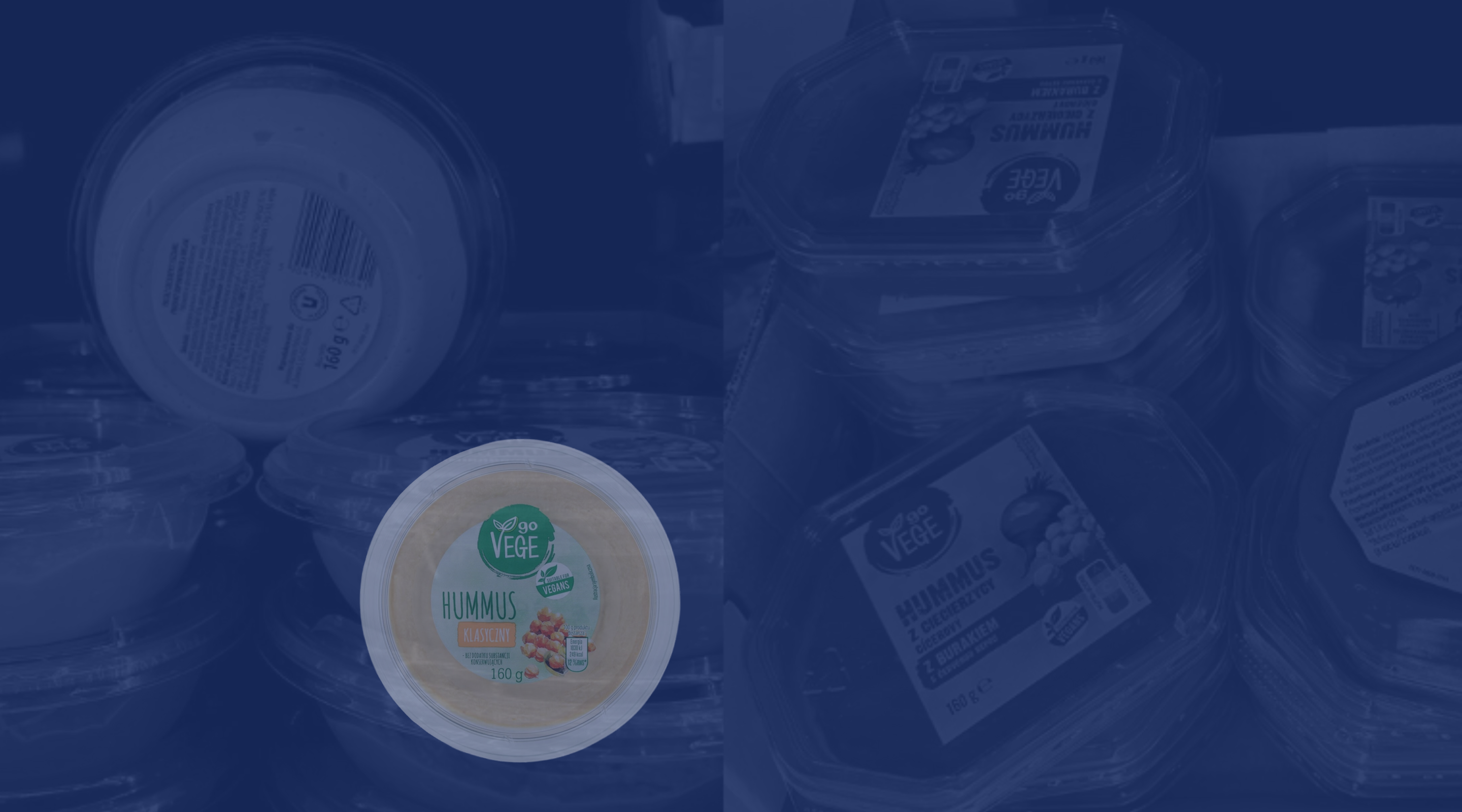
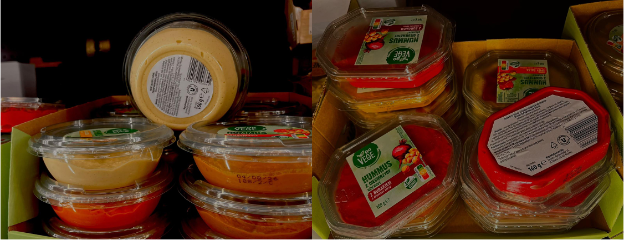
Errors can occur during the hummus packaging labeling process, such as missing labels, incorrect label placement, using the wrong label or illegible expiration date printing. Manual inspection of such discrepancies is inefficient at high production line speeds and increases the risk of defective products reaching the market.
The goal of the project is to develop a vision system for the automatic inspection of labels on hummus packaging. The system will verify the presence and position of the label, read the barcode, and check the accuracy and legibility of the expiration date using OCR technology. The solution is designed to increase quality control efficiency and reduce errors in the production process.
SOLUTION
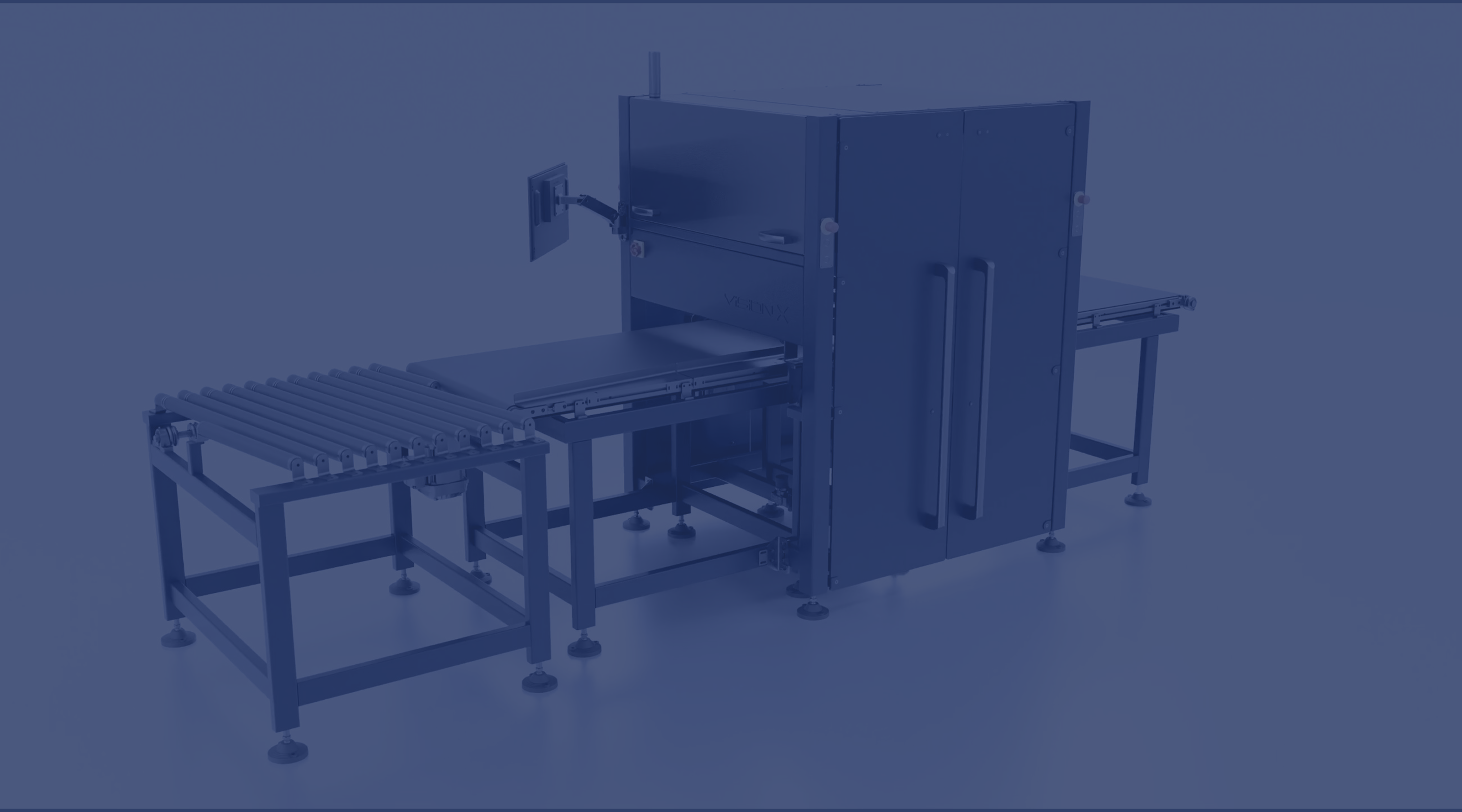
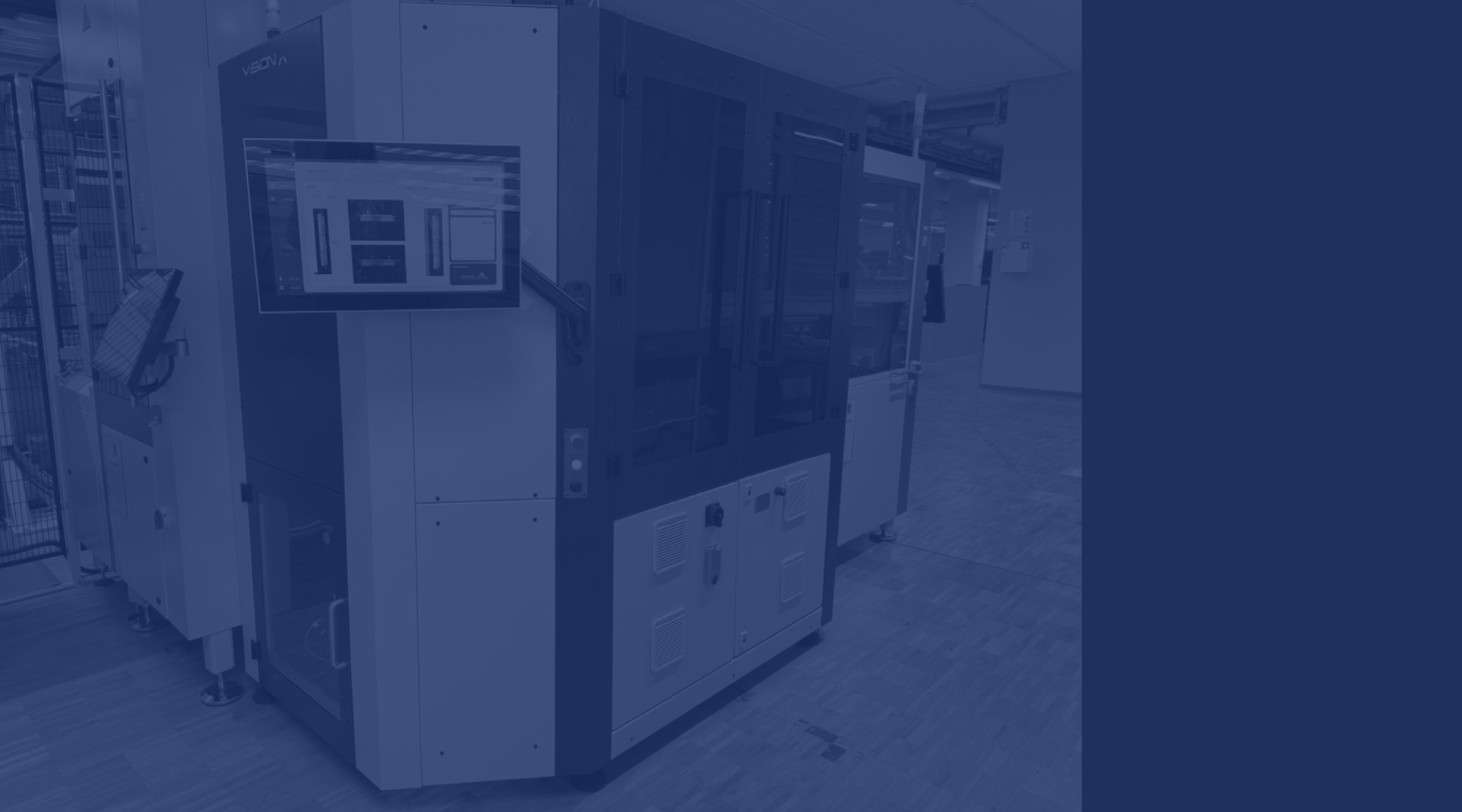
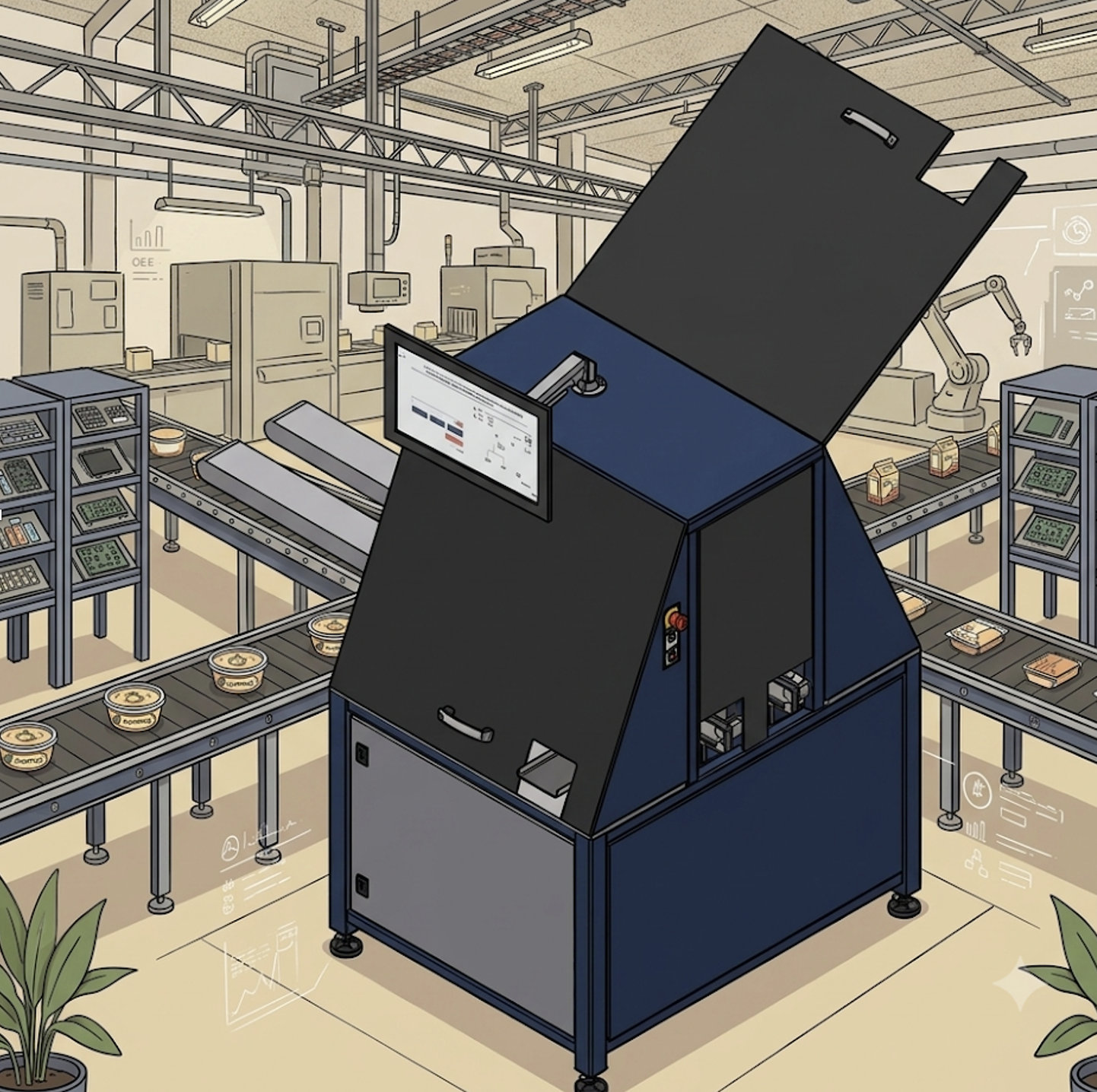
To address these challenges, we have developed a label inspection system.This is an advanced system that automatically checks product quality, designed to inspect the presence and position of labels on hummus packaging from three sides.
It utilizes industrial cameras, specialized lighting, and our proprietary image processing algorithms. The system is 4-lane and operates at a maximum capacity of 72 boxes / minute / lane.
QUALITY ANALYSIS AND CONTROL
- Three-sided label inspection: The system verifies the presence and correct positioning of labels on three sides of the hummus packaging (top, bottom, side).
- Rejection criteria for labels: A product is classified as defective and rejected if:
- The label is completely missing (from the top, bottom, or side).
- The top or bottom label is misaligned beyond the specified threshold from the center.
- Side label application at an incorrect angle relative to the horizontal
- Expiry date verification: The system checks for the presence of the date, as well as its legibility and accuracy (e.g., verifying that the month is correct and the format is error-free).
- Rejection system control: an air nozzle that pushes defective products aside for re-inspection.
- Basic statistics: Daily and monthly overview of the number of accepted and rejected items, as well as total production.
- Ability to learn a new label in one place for all your systems (lanes).
● 24V control: 24V weighing system start/stop (a product entering the labeler must exit it).
TECHNICAL SPECIFICATIONS
- System scale and performance
The system supports up to 4 production lanes. The maximum throughput is 72 boxes per minute per lane. The error detection rate will be 99.5%, with a false rejection rate of less than 0.5%.
- Rejection mechanism
From air knives to manipulators precisely synchronized with the moment a defective product passes under the camera. Damaged products are diverted to the side for re-verification.
- Integration and control
The weighing system is controlled via a 24V signal (start/stop function).
The system operates on the assumption of continuous movement on the labeller (it is not possible to stop the product during this process).
- Client-side requirements
For the system to function correctly, the hummus packaging must not rotate more than 15 degrees in the section between the labeller and the cameras.
- Software and operation
The system offers centralized management—the ability to "teach" a new label pattern in one place, which automatically updates the configuration across all 4 lanes.
RESULTS
Implementing an automated label inspection system will significantly streamline your production process. With three-sided label inspection, a four-lane system, and high-accuracy error detection, this solution ensures the highest quality and precision in product packaging.
A key component of this system is OCR technology. It enables precise detection and verification of labels and expiration dates on packaging. Using this technology allows for the effective identification of misaligned labels, missing markings, or illegible prints, which enhances the aesthetics of the final products and supports full quality control automation.
As a result, this contributes to a significant reduction in complaints, higher standards for the finished product, and increased efficiency across the entire production line.
See other articles