Casserole quality control
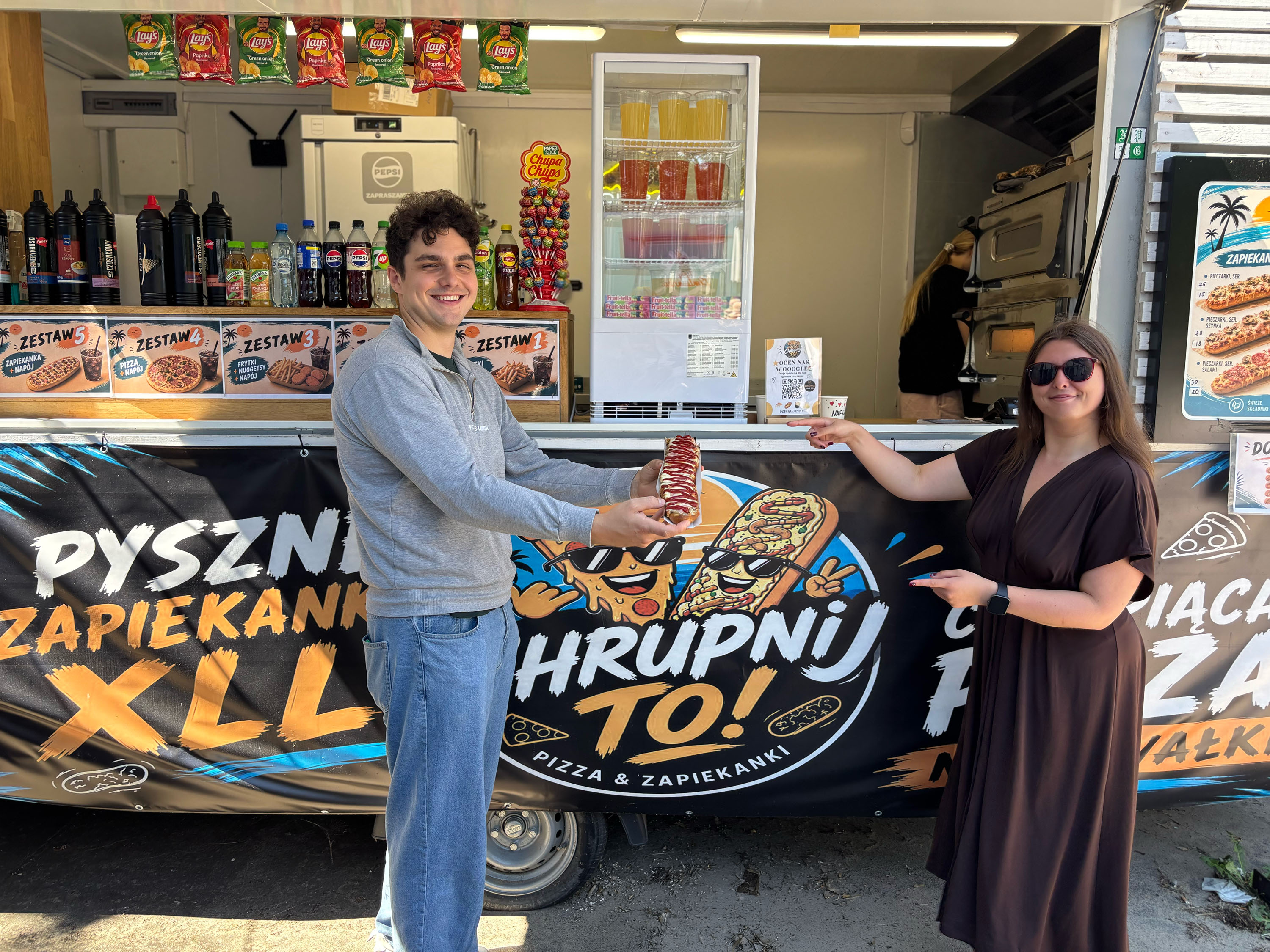
As a company from Pomerania, it’s hard for us to ignore one of our local fast-food icons—the zapiekanka.
How to ensure every toasted baguette looks the same, contains the right amount of ingredients, and meets quality standards.
THE PROBLEM
Modern food production requires precise, automated quality control methods. Traditional RGB cameras only allow for visual assessment, which means they cannot reliably distinguish between individual ingredients or evaluate their quality in multi-ingredient products like toasted baguettes or pizza.
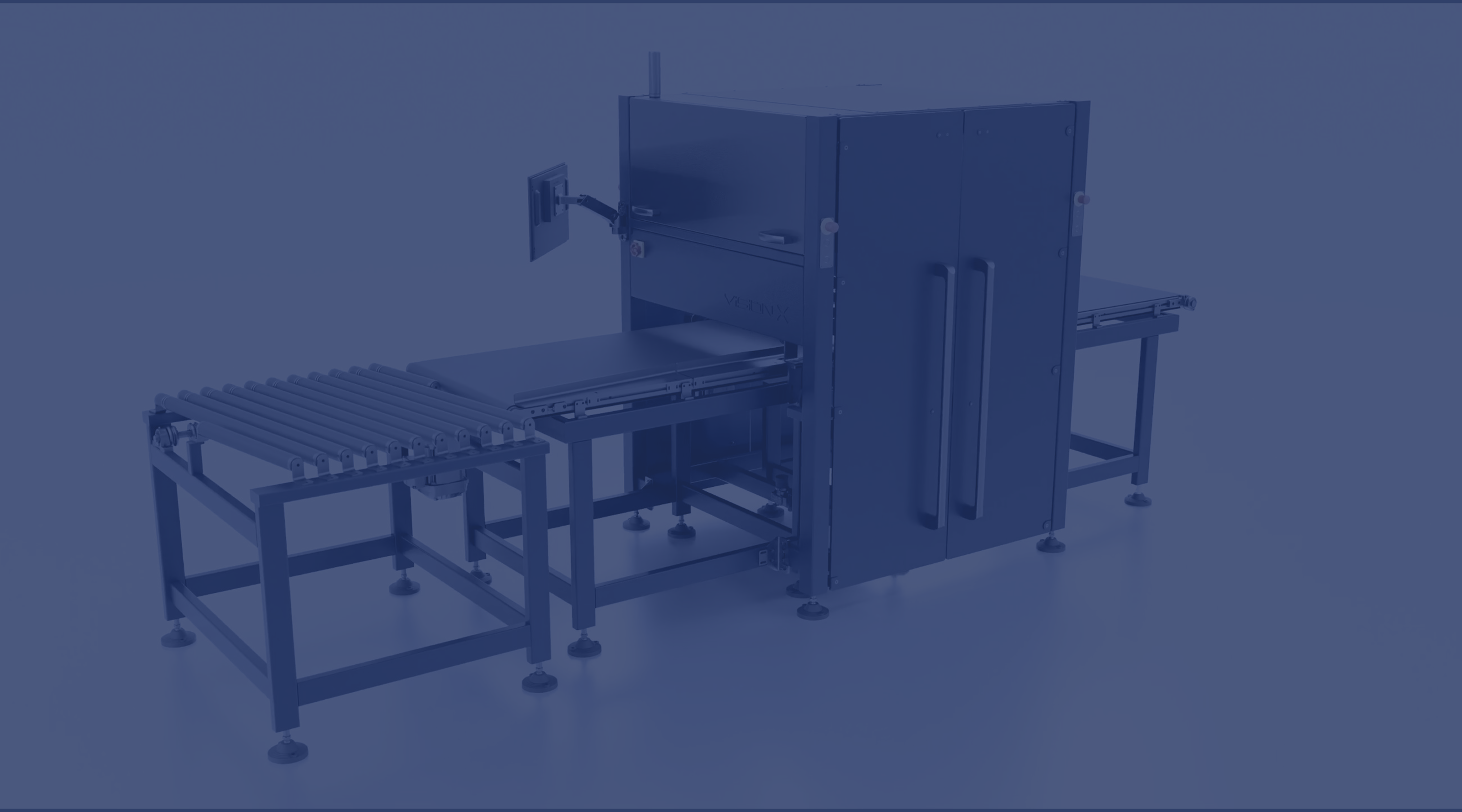
Our project aimed to develop an automated quality control system for toasted baguettes that enables precise ingredient recognition and verifies product compliance with specifications, meeting the growing market demand for modern, automated food production solutions.
THE SOLUTION
The solution to this problem is hyperspectral cameras. By analyzing reflected light, they can identify individual ingredients based on their unique spectral properties, which are invisible to both the human eye and standard RGB cameras. This significantly enhances automated quality control capabilities and opens up new perspectives for modern food production.
HOW HYPERSPECTRAL CAMERAS WORK
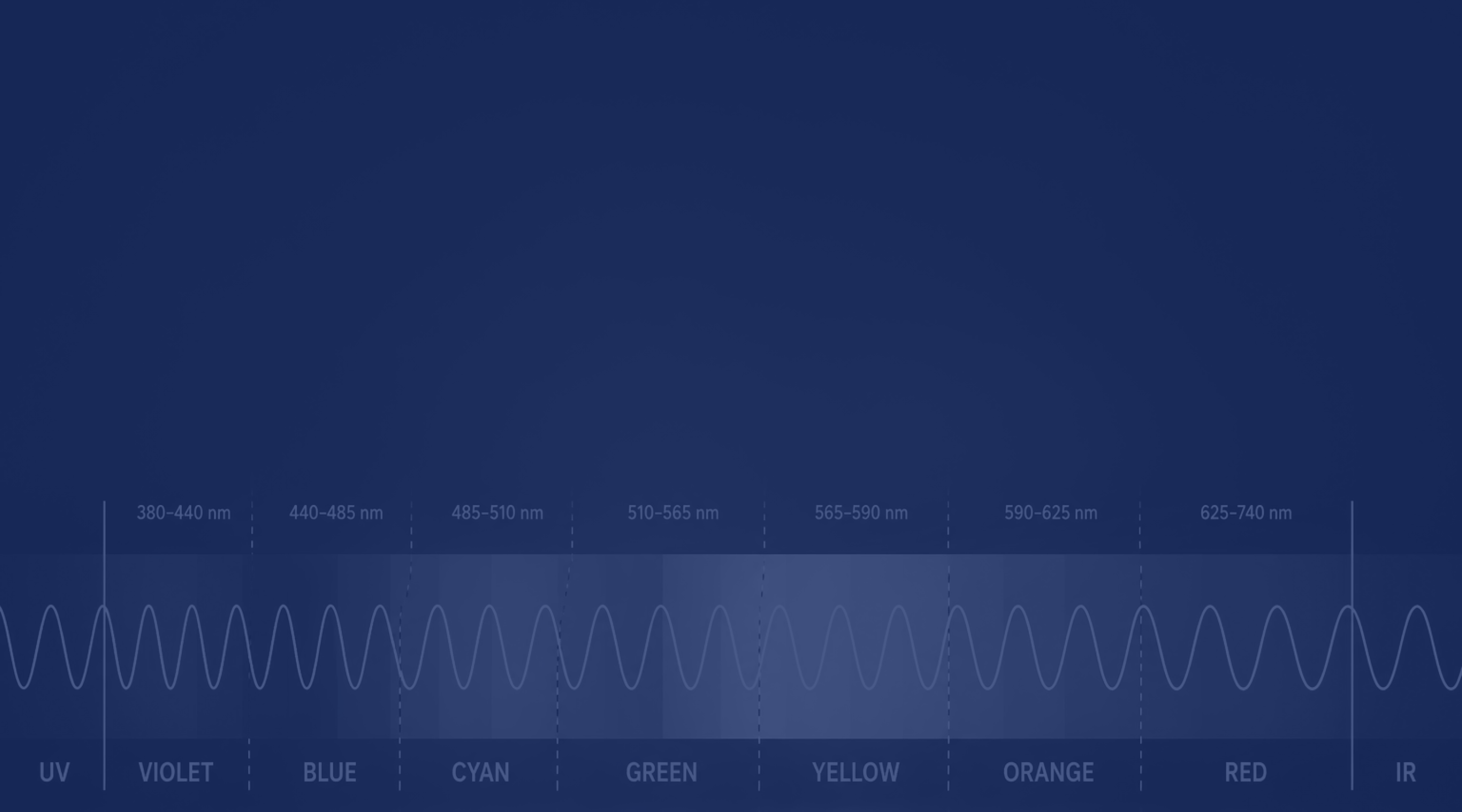
Hyperspectral cameras capture images across hundreds of narrow spectral bands, often covering ranges invisible to the human eye. Every material reflects and absorbs light in a unique way, creating what is known as a spectral signature. The system analyzes these signals, allowing each pixel to be identified as a specific component.
IDENTIFYING TOPPINGS ON A PIZZA BAGUETTE
For the product being analyzed—a pizza baguette with multiple toppings—a hyperspectral camera allows for the precise distinction between:
● variable ingredients:
o kebab meat
o ham
o onion
o mushrooms
● fixed ingredients:
o ser
o sos
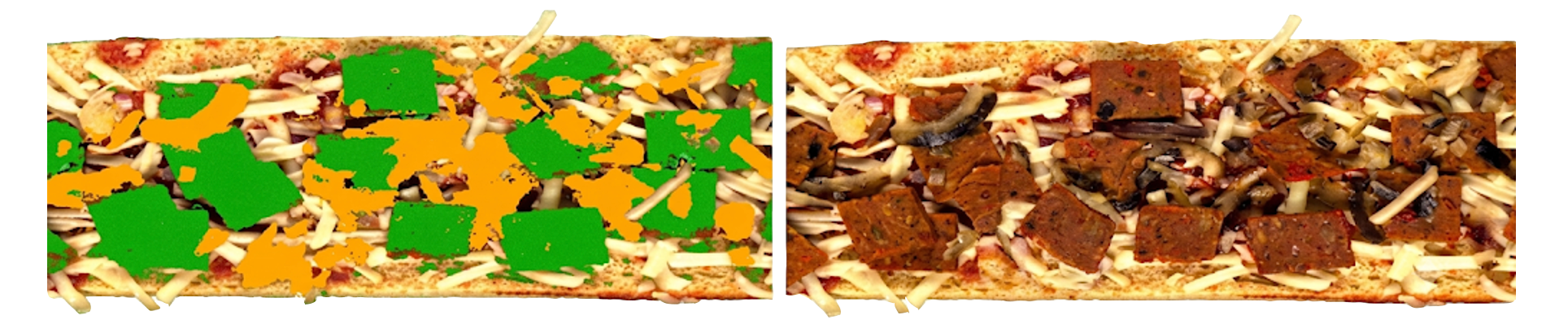
This technology allows not only for the identification of a component's presence but also for determining its precise distribution, percentage share and surface coverage continuity .
Kebab:

RESISTANCE TO PRODUCT ORIENTATION
One of the greatest advantages of the hyperspectral system is its independence from product orientation.
The spectral signature of an ingredient remains the same regardless of:
● the orientation of the casserole on the conveyor,
● changes in position within the camera's field of view,
● minor product deformations,
● variations in ingredient placement.
This ensures the system operates reliably without requiring the casserole to be positioned in a strictly defined way.
Kebab different orientation:
INGREDIENT DISTRIBUTION QUALITY CONTROL
The hyperspectral camera allows for the creation of a distribution map for each ingredient on the surface of the casserole, which makes it possible to assess:
● uniform coverage,
● presence of "empty spots,"
● local ingredient clustering,
● compliance with production standards.
This is particularly important for products where ingredients must be evenly distributed to maintain proper quality and presentation.
Hyperspectral analysis allows for the detection of instances where, for example, kebab meat, ham, or other ingredients are clustered on one side, which reduces the risk of complaints and product quality degradation.

BENEFITS FOR THE PRODUCTION PROCESS
● Automated and repeatable quality control
The system analyzes every product in the same way, without the influence of human variables.
● Precise error detection
The ability to identify even small amounts of an ingredient, shortages, or excesses.
● Increased efficiency
Elimination of manual inspection and reduced analysis time.
● Reporting and full documentation
Spectral data can be processed statistically to generate quality reports and more.
● Recipe compliance
The system easily detects deviations from technological standards and allows for real-time adjustments.
Half-ham


TECHNICAL SPECIFICATIONS
Spectral range
● MV.C VNIR camera operating in the 400 to 1000 nm range - covers visible light and near-infrared, enabling the analysis of material properties invisible to standard RGB cameras.
Imaging
● the camera uses push-broom (line scanning) technology, which ensures high spectral resolution while maintaining a high signal-to-noise ratio.
Optical system
One of the most important features of Headwall cameras is the use of:
● an aberration-corrected spectrograph,
● a proprietary holographic diffraction grating.
Benefits:
● minimization of chromatic aberration,
● uniform sharpness across the entire 400–1000 nm range,
Developed algorithms analyze hyperspectral data to automatically identify components and detect non-conformities, ensuring objective and repeatable quality control.
See other articles