Hyperspectral cameras
Hyperspectral cameras
Modern manufacturing requires increasingly precise quality control. Standard vision systems analyze a product's appearance, yet many defects remain invisible to the human eye and classic RGB cameras.
The solution is hyperspectral imaging , a technology that allows for the analysis of materials based on their unique "spectral signature."

How do hyperspectral cameras work?
Unlike traditional cameras that record three RGB color channels, hyperspectral cameras analyze images across many wavelength ranges. This makes it possible to detect differences that are not visible in a standard image—even when two objects look identical.
Every material interacts with electromagnetic radiation in a different way—absorbing some wavelengths while reflecting or transmitting others.
The result is a unique spectral signature. This is a characteristic pattern of reflection, absorption, or emission of electromagnetic radiation by a given material, depending on the wavelength.
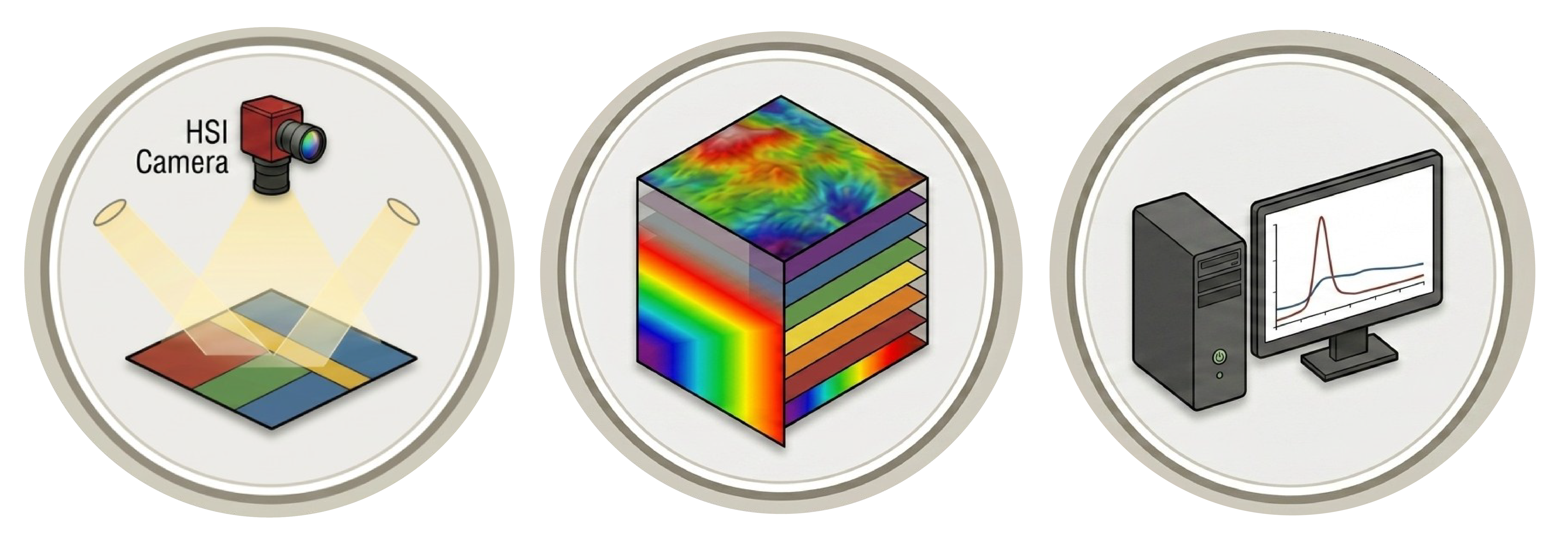
In practice, hyperspectral imaging involves several stages:
1. The camera captures light reflected from the object being examined.
2. The light is separated into multiple wavelengths and recorded as a hyperspectral cube.
3. The data is analyzed to identify materials and determine their properties.
What does this technology enable?
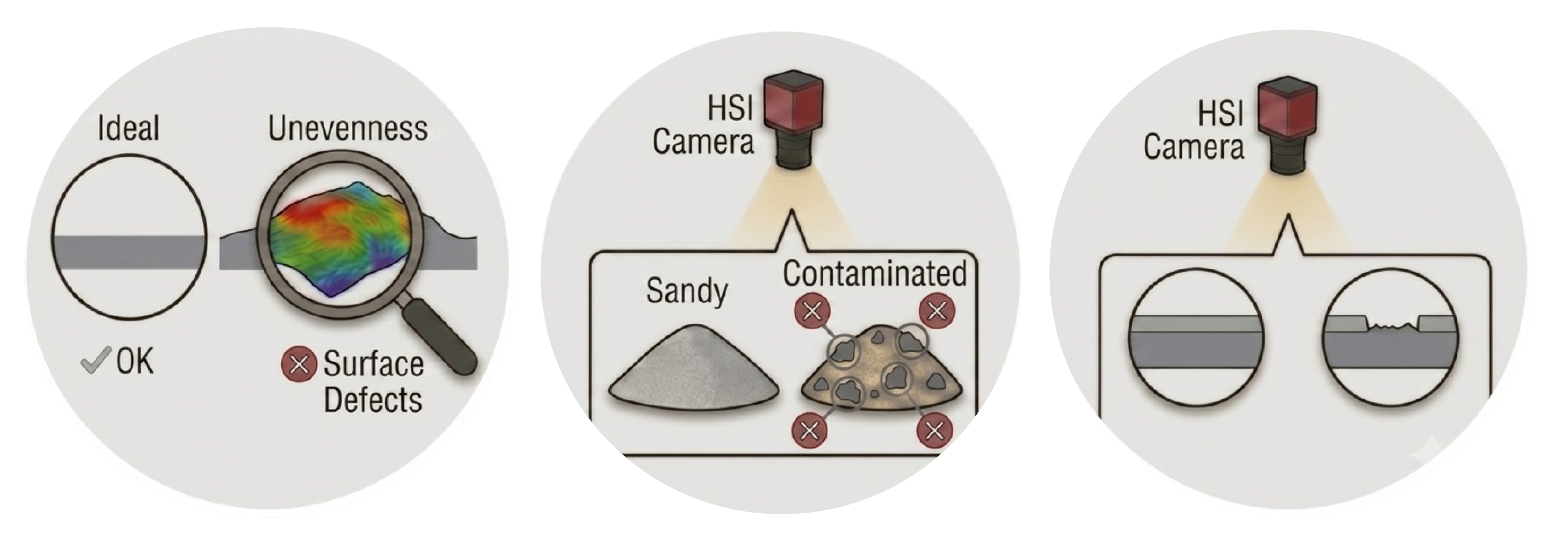
Hyperspectral cameras allow for the detection of, among other things:
● differences in material composition,
● defective coatings and layers,
● contaminants,
● surface irregularities,
● defects invisible to the naked eye.
Our role
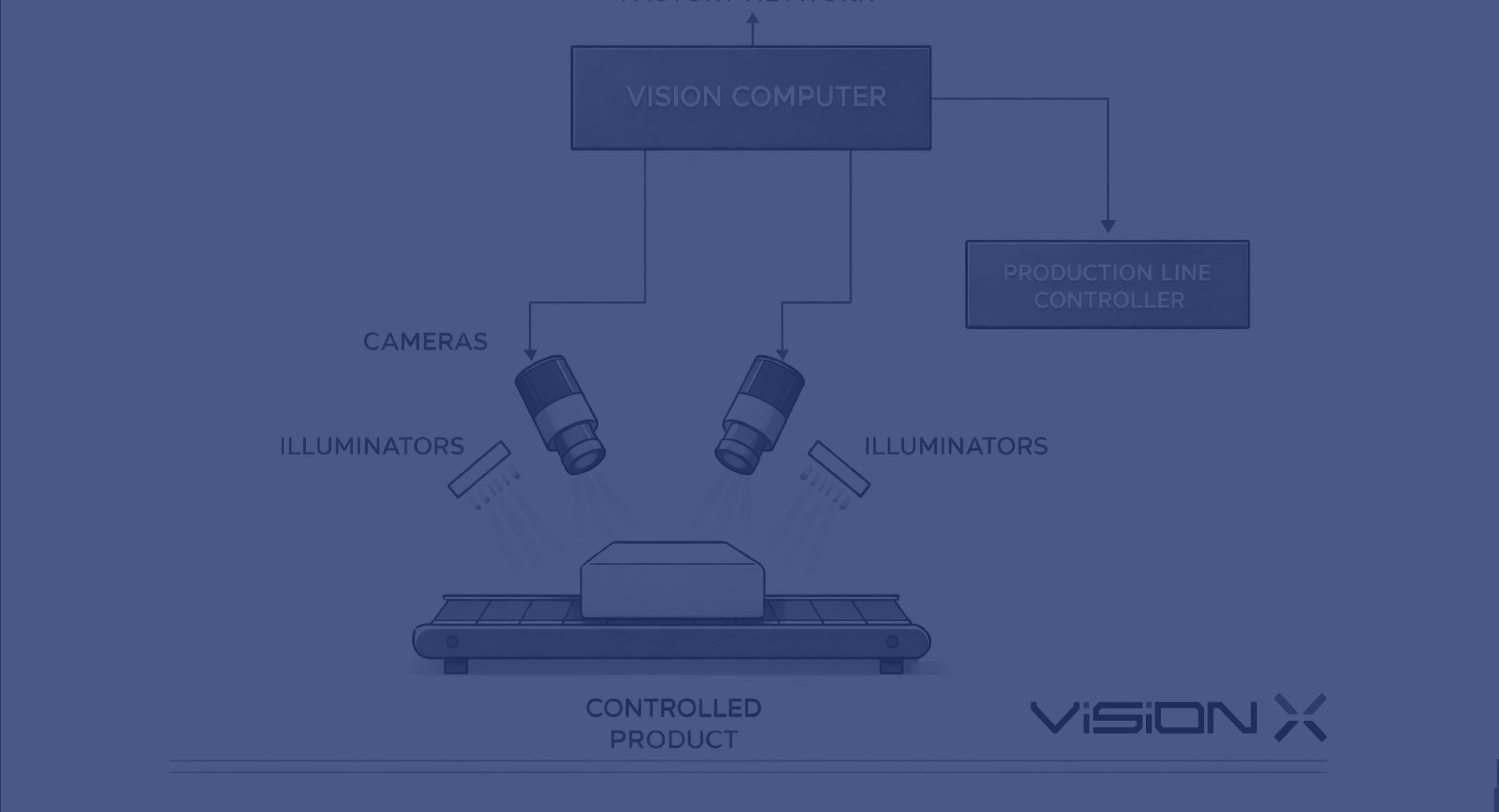
We use hyperspectral cameras as part of our advanced quality control systems.
We create complete solutions including:
- selection of imaging technology,
- dedicated lighting,
- data analysis and AI algorithms,
- integration with the production line,
- inspection results reporting.
Each system is designed individually and tailored to the requirements of a specific production process.
See other articles